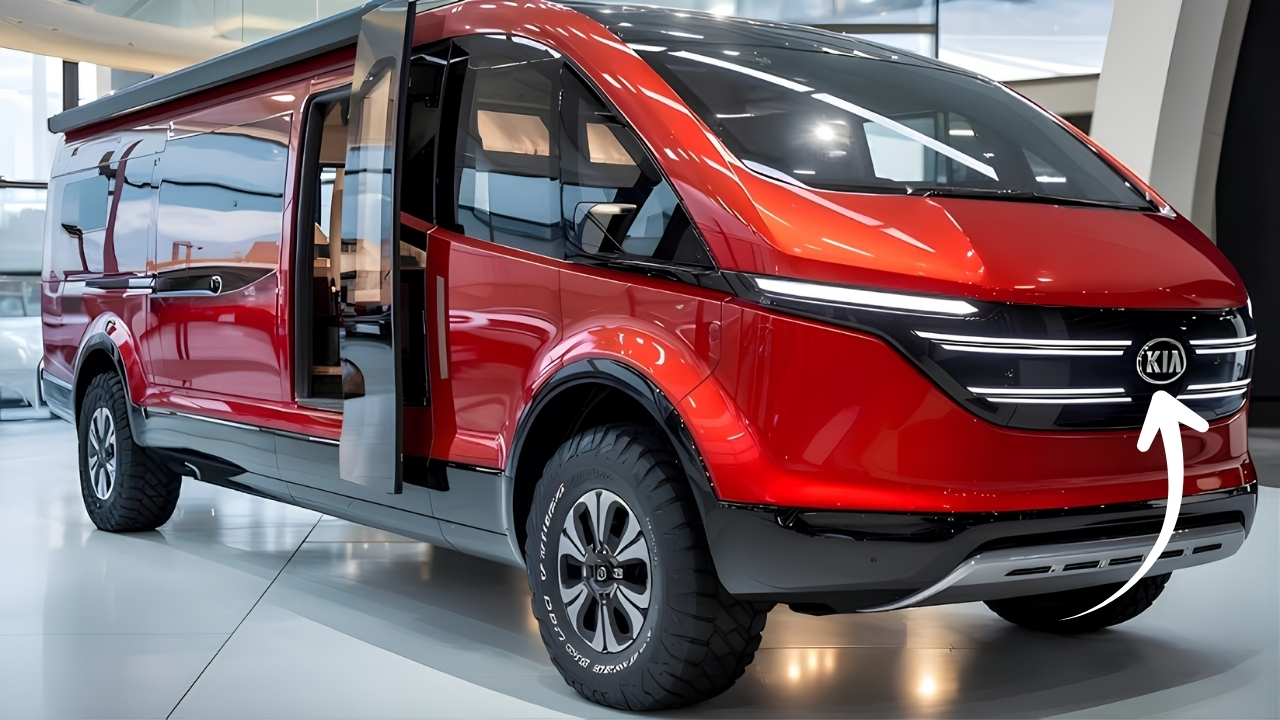
2026 Kia Camper Van : Kia is preparing to enter the growing camper-van market with a vehicle based on its new PV5 purpose-built electric van. Although many online reports call it the “2026 Kia Camper Van,” the company has not officially confirmed a production camper van for the United States.
The most credible information currently points to the Kia PV5 and its outdoor-focused WKNDR concept as the foundation for a future electric camper.
The PV5 is part of Kia’s new Platform Beyond Vehicle strategy, which is designed to support multiple body styles and commercial uses. Kia says the platform can be adapted for passenger transport, cargo work, wheelchair access and lifestyle conversions, including a Light Camper configuration.
A Different Approach to Van Life
Instead of developing a large traditional motorhome, Kia appears to be focusing on a smaller and more flexible electric van. The PV5 is considerably more compact than a Mercedes-Benz Sprinter or Ford Transit camper conversion, making it easier to drive through cities, park in regular spaces and use as a daily vehicle.
The most adventurous version shown so far is the PV5 WKNDR concept. Revealed at the 2024 SEMA Show, the concept features a raised stance, rugged tires, modular interior equipment and an outdoor-oriented design. Kia describes it as an electric adventure van rather than a confirmed production model, so some of its more dramatic features may not appear on the final vehicle.
The production direction may instead resemble a compact camper conversion. Recent reports describe a PV5-based LightCamp layout with sleeping space, a removable kitchen and a roof sleeping area. Vantrack has said it plans to present its complete PV5 LightCamp camper in September 2026, although that vehicle would be a conversion rather than a Kia-built factory motorhome.
Interior Designed for Flexibility
The PV5’s biggest advantage is expected to be its modular cabin. Depending on the version, the rear seats could fold, slide or be removed to create space for camping equipment. This would allow owners to use the van for weekday transportation and weekend trips without needing a separate recreational vehicle.
A practical camper layout could include a foldable bed, compact kitchen unit, portable refrigerator, storage drawers and a small dining table. A pop-up roof could provide extra sleeping space without making the van excessively tall while driving. The WKNDR concept also suggests that Kia is considering integrated outdoor equipment and solutions for powering camping accessories.
The standard PV5 Passenger already offers flexible seating arrangements. Kia’s Korean specifications list a five-seat configuration with fold-and-dive rear seats, expanding luggage capacity from 1,330 liters to as much as 2,310 liters when the second row is not being used.
That kind of flexibility could make the PV5 attractive to couples, solo travelers, photographers, cyclists and digital nomads. However, buyers should not expect the same amount of interior standing room or bathroom space found in a full-size Class B motorhome.
Electric Powertrain and Range
The PV5 is expected to use a single electric motor driving the front wheels. Kia’s published Korean specifications list a 120-kilowatt motor producing 250 Nm of torque. The Passenger version uses a 71.2-kWh battery and has a certified driving range of up to 358 kilometers, or approximately 222 miles, under Korea’s testing system.
Cargo versions are available with either a 51.5-kWh or 71.2-kWh battery. Kia lists maximum ranges of 280 kilometers and 377 kilometers respectively for those versions under Korean certification procedures. These figures should not be treated as official EPA ratings for the United States, because American testing normally produces different results.
A camper conversion would likely travel less distance than a standard passenger van. Added furniture, roof equipment, camping gear and larger tires can increase weight and aerodynamic drag.
In real-world American driving, a practical range of roughly 170 to 220 miles may be more realistic, depending on weather, speed, load and conversion design.
Fast charging will be important for long-distance travel. The PV5’s electric architecture is intended to support modern charging technology, but Kia has not yet published a complete U.S.-specific charging schedule for a camper version.
Expected Features
Feature | Expected details |
Vehicle base | Kia PV5 electric purpose-built van |
Powertrain | Single-motor electric drivetrain |
Motor output | Approximately 120 kW |
Battery options | About 51.5 kWh and 71.2 kWh |
Seating | Flexible passenger layouts, depending on configuration |
Sleeping capacity | Likely two adults; four with a roof tent or pop-top |
Interior | Foldable bed, modular kitchen and removable storage |
Drive system | Front-wheel drive expected; AWD not confirmed |
Range | Approximately 170–220 miles in camper use, estimated |
U.S. release | Not officially confirmed |
U.S. price | Not announced; estimated conversion pricing may begin around $50,000 |
2026 Kia Camper Van Price in the USA
Kia has not announced an official American price for a production camper van. This is an important distinction because several websites and videos currently publish precise figures, including claims of $52,995, $58,900 or more than $65,000. Those numbers are estimates or promotional claims, not confirmed Kia pricing.
The regular PV5 is expected to be positioned below premium electric vans, while a camper conversion would add considerable cost for furniture, plumbing, electrical equipment, insulation and labor. Based on available international pricing and the likely cost of conversion equipment, a reasonable estimate for the United States could be:
- Standard PV5 passenger van: approximately $40,000–$50,000 before conversion.
- Basic camper conversion: approximately $50,000–$60,000.
- Fully equipped LightCamp-style model: approximately $60,000–$75,000.
These figures exclude potential destination charges, taxes, dealer fees and optional equipment. They should be updated when Kia confirms U.S. availability and official MSRP.
Release Date and Final Outlook
The Kia PV5 is being introduced in global markets, but the company has not confirmed that the WKNDR concept or a factory-built camper will be sold in America during the 2026 model year. The most likely near-term path is a standard PV5 followed by third-party camper conversions.
If Kia keeps the price under control, the PV5 could appeal to buyers who want a smaller and more efficient alternative to a Sprinter conversion. Its compact size, electric drivetrain and adaptable interior are strong advantages.
Also Read this – 2026 BMW iX Motorhome Luxury Smart features, Electric 2 bedroom set house like 8-star hotel
The main concerns will be charging access, winter range, limited interior space and the absence of a confirmed U.S. sales plan.
For now, the 2026 Kia Camper Van should be viewed as an upcoming PV5-based possibility rather than a fully confirmed American motorhome. Its final price, specifications and launch date will depend on Kia’s future product announcements and the availability of certified conversion partners.